Quantum Computing Reaches Commercial Viability
Quantum computing is not just a faster computer; it is a different kind of computer. Interpreting its potential requires separating the sci-fi hype from the physics reality, understanding where it threatens existing security paradigms and where it unlocks unprecedented scientific discovery.
The Basics: Superposition and Entanglement
To understand the disruption, one must understand the physics. Classical computers are linear. If you want to search a database of 1 million entries, you check them one by one (or in parallel batches). A quantum computer uses superposition to represent all possible states simultaneously. Through "interference," it cancels out the wrong answers and amplifies the correct probability.
This allows it to solve "combinatorial optimization" problems that would take a classical supercomputer the age of the universe to finish.
The Encryption Apocalypse (Y2Q)
The internet's security (RSA, Elliptic Curve) relies on the fact that factoring large prime numbers is hard for classical computers. It is trivial for a sufficiently powerful quantum computer. This is the "Q-Day" threat.
Governments are already harvesting encrypted data ("Harvest Now, Decrypt Later"). They store your encrypted emails today, waiting for the quantum computer of 2030 to unlock them. This compels organizations to migrate to Post-Quantum Cryptography (PQC) immediately. NIST has recently standardized algorithms (like CRYSTALS-Kyber) that are resistant to quantum attacks. The upgrade cycle for the global banking system is already underway.
Optimization: Logistics and Finance
Beyond science, business loves optimization.
- Logistics: The "Traveling Salesman Problem." Optimizing the routes of 10,000 delivery trucks to save fuel is exponentially hard. Quantum algorithms can find the global minimum for energy consumption instantly.
- Finance: "Portfolio Optimization." Balancing risk and reward across thousands of assets in a volatile market. JPMorgan Chase is actively testing quantum algorithms for high-frequency trading and risk analysis.
Access: Cloud Quantum
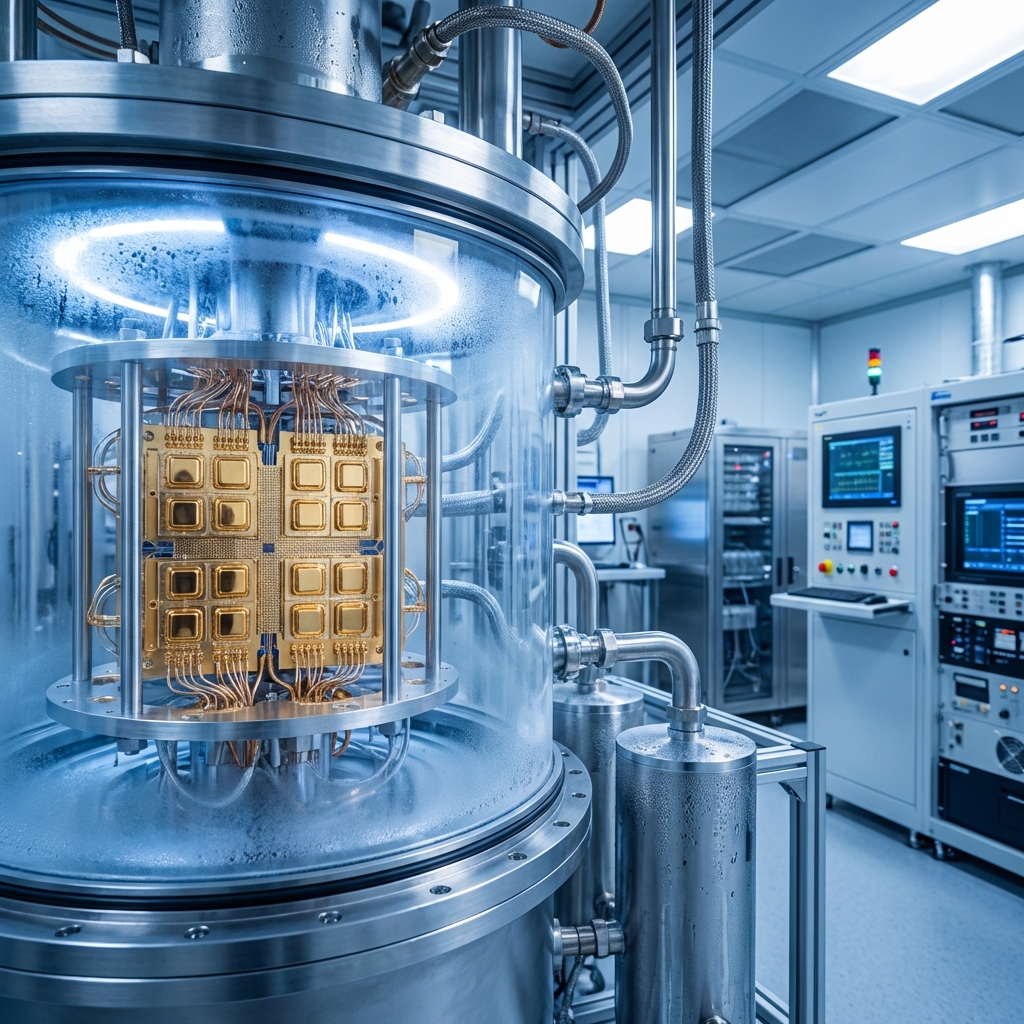
You will never own a quantum computer. It looks like a giant golden chandelier and sits in a dilution refrigerator. Access is purely via the cloud. Amazon Braket, Azure Quantum, and IBM Cloud allow developers to write code (using Python libraries like Qiskit) and run it on real hardware today. This low barrier to entry is fostering a generation of "Quantum Native" developers.
Conclusion
Quantum computing changes the class of problems that are solvable by humanity. It is the ultimate tool for navigating complexity. While the hardware is still maturing, the software and algorithmic foundations are being laid today.