Edge Computing Decoded
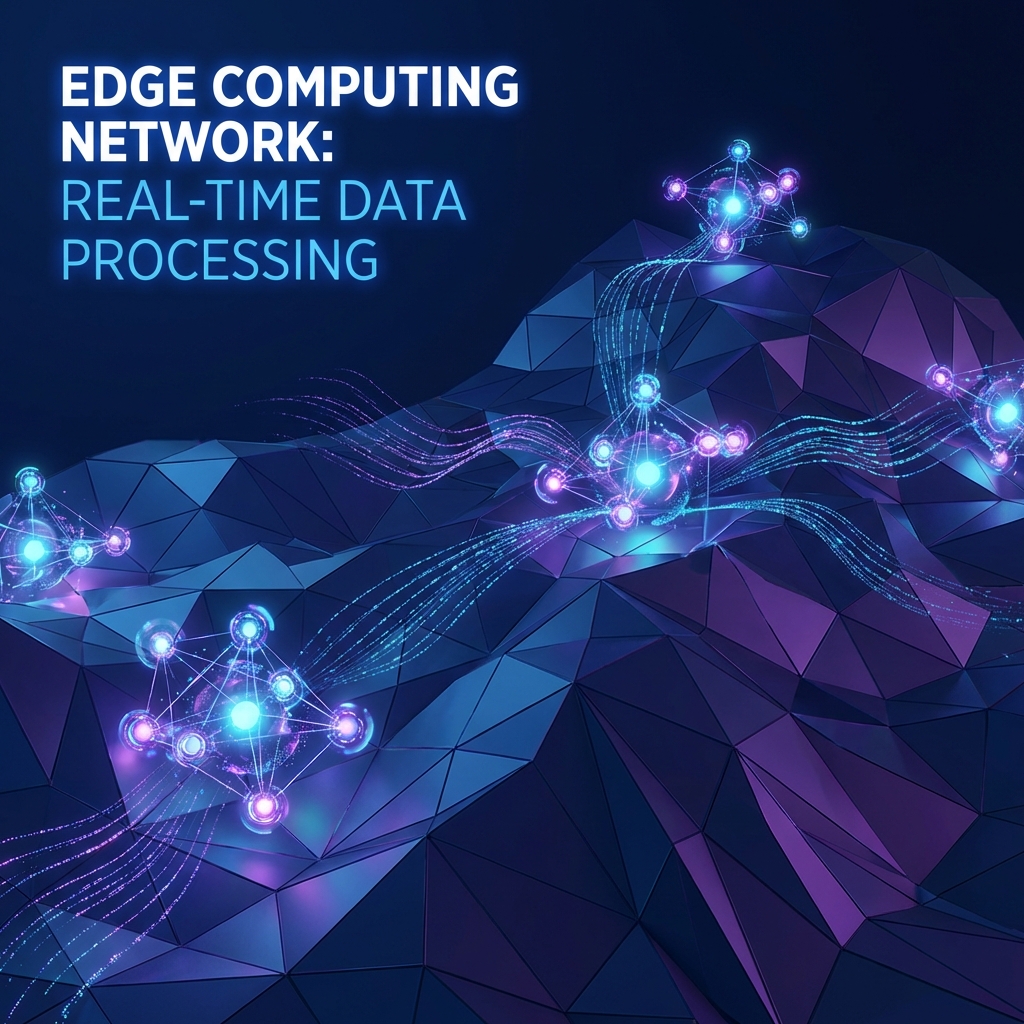
Edge computing is not a replacement for the cloud, but its necessary evolution. By processing data closer to where it is created, we are enabling a new class of real-time applications that were physically impossible under the centralized cloud model.
The Physics of Latency
Light has a speed limit. In a fiber optic cable, distinct from a vacuum, it's roughly 200,000 km/s. If a server is 3,000 km away, the round-trip time (RTT) for a packet is minimally 30ms, often 100ms+ with routing hops. For a human browsing the web, this is imperceptible. For an autonomous vehicle moving at 70mph, 100ms is 10 feet of travel distance. That gap is the difference between life and death.
Edge computing solves this by moving the server to the base of the cell tower (MEC - Multi-access Edge Computing) or even onto the device itself. Latency drops to single-digit milliseconds. This isn't just optimization; it is a requirement for safety-critical systems.
Architecture: The Fog Layer
The architecture is often described as a continuum:
- Device Edge: Computation on the sensor/phone/car itself.
- Far Edge: A server closet in a factory or a 5G tower.
- Near Edge: A regional data center in a nearby city.
- Central Cloud: The massive hyperscale facilities (e.g., AWS Northern Virginia).
This "Fog Computing" layer handles the immediate deluge of data, filters it, acts on urgent alerts, and then sends only the summarized insights to the central cloud for long-term storage and model training. This saves massive bandwidth costs.
Privacy and Data Sovereignty
Edge is also a privacy play. In healthcare, a hospital can process sensitive patient data locally on an Edge server without it ever leaving the premise. This simplifies HIPAA and GDPR compliance. The data stays resident; only the generalized learnings (federated learning) move up to the cloud.
Similarly, "Data Sovereignty" laws in Europe require citizen data to stay within national borders. Edge nodes ensure that German data stays in Germany, rather than inadvertently routing through a US data center.
The AI Edge
The biggest driver for Edge in 2026 is AI interference. We can't send every voice command to the cloud. "TinyML" allows optimization of neural networks to run on microcontrollers. Your smart speaker processes the "Wake Word" locally. The next generation of security cameras process facial recognition on the silicon of the camera itself, preserving privacy by sending only text metadata ("intruder detected") rather than a video stream.
Conclusion
Edge computing decodes the bottleneck of the modern internet: bandwidth and latency. It distributes intelligence from the center to the periphery, creating a nervous system for the planet that is faster, more resilient, and more private.